
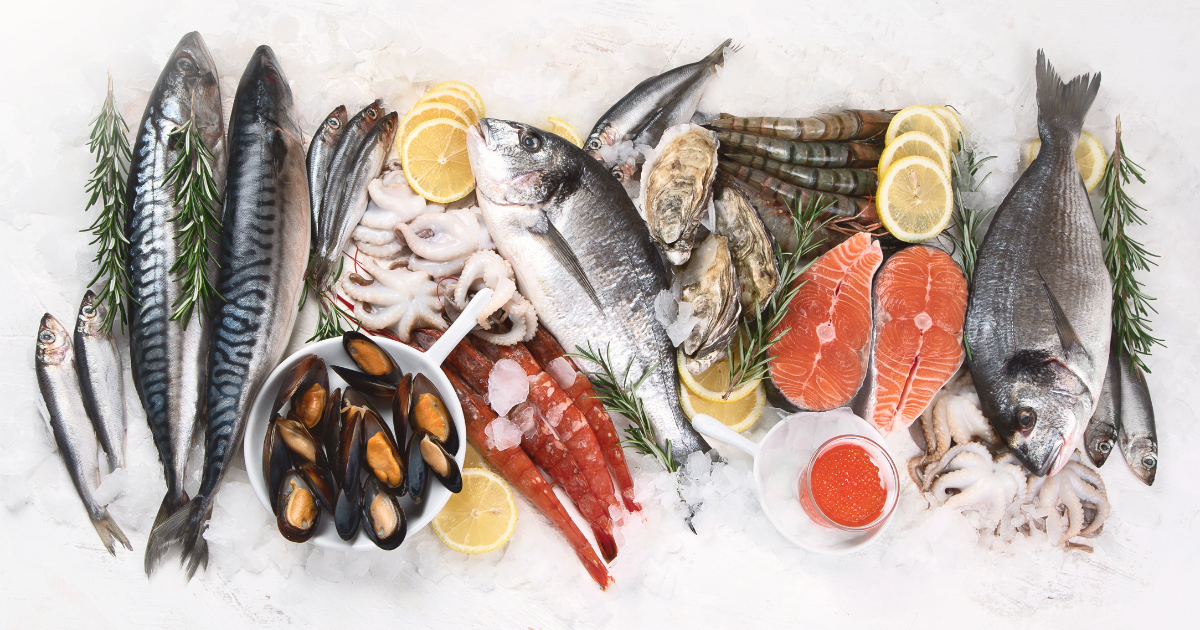
I don’t think it’s a surprise to hear that seafood has some fantastic benefits for athletes. The Mediterranean dietary pattern, which emphasizes regular seafood consumption, has specific benefits that athletes are interested in. These include decreasing inflammation and injury risk, along with improving cardiovascular and brain function (source).
But just because we should include a specific food group, such as seafood, doesn’t automatically mean we know how to get it on the dinner table.
In my work with athletes and active people, these are some of the pushbacks I receive for why they don’t eat more of this powerful food:
“I don’t know where to buy seafood.”
“I don’t know what to look for when shopping for seafood.”
“I don’t have any idea how to cook seafood.”
“I’m not sure I like the taste of seafood.”
I’m Angie, a Registered Dietitian, sports nutrition expert, and a big seafood fan. I love helping athletes find enjoyable and sustainable ways to plan meals and snacks that support busy lifestyles. I’m not only committed to helping you improve your performance as an athlete, but I’m also always rooting for your overall health. Seafood plays an important role in both athletic performance and recovery for athletes, all while helping to prevent chronic disease; a true win-win.
Note: I’m a Wild Alaskan Company Partner. This means that I may receive a small commission if you use my link to make a purchase – thanks for the support! All opinions are my own.
Let’s dive (ha!) into some of the benefits of seafood for athletes.
High Quality Protein for Recovery
If you’ve been following along here for a while, you’ll know that high-quality protein, particularly after a tough workout, can help our bodies heal from training – faster and more thoroughly.
For a refresher on the importance of protein at your morning meal, check out 30-Gram Protein Breakfast to Power Your Day.
If you could use some tips on quick, portable, and tasty protein snacks, check out Athlete’s Guide to the Best-Tasting Protein Bars.
What is often missed in the protein conversation is that there are both mental and physical benefits to varying the types of protein we include in our diets.
Sometimes I see athletes eating so many chicken breasts, I worry they may grow feathers.
Sometimes I worry that one more protein shake might break the blender.
All joking aside, the same protein foods on constant repeat robs us of opportunities to experience a variety of flavors and textures, and to consume a broader range of nutrients. When you choose seafood as a protein source, you not only get very high-quality protein, but you also get a good dose of other nutritional components not found in other proteins.
Athlete takeaway: It’s not just about hitting your protein target; it’s about choosing proteins that your body can efficiently use to repair, rebuild, and adapt.
Omega-3s: Recovery, Inflammation, and Brain Health

One of the biggest advantages seafood has over other protein sources is its content of omega-3 fatty acids, specifically EPA (eicosapentaenoic acid) and DHA (docosahexaenoic acid).
When you train, especially at higher intensities or volumes, you’re creating a certain amount of inflammation in the body. This isn’t a bad thing; it’s part of the adaptation process that builds muscle strength and volume. It’s only excessive or prolonged inflammation that can slow recovery, increase soreness, and even raise injury risk over time.
EPA and DHA help modulate this inflammatory response. Rather than completely shutting it down, they help keep it in a more controlled state, which supports recovery without blunting training adaptations.
For athletes, this can translate to:
- Less lingering soreness between sessions
- Improved recovery timelines
- Better ability to maintain consistent training
DHA also plays a unique role in brain health, which is especially relevant for athletes in contact or high-impact sports. There’s growing interest in how omega-3s may support cognitive function and help protect the brain over time.
Some plants, such as chia seeds and walnuts, have omega-3 fatty acids, but they aren’t the same as those found in fish. Unlike plant-based omega-3s (alpha-linolenic acid or ALA), which require conversion in the body, EPA and DHA from seafood are ready to use, making them a more efficient source.
Athlete takeaway: Seafood contains healthful fats that help you recover well, so you can show up consistently and perform at your best.
For more information, check out Athlete’s Secret Weapon? Benefits of an Anti-Inflammatory Diet.
Amino Acid Profile, Digestibility, Versatility
Seafood is a complete protein, meaning it provides all nine essential amino acids your body can’t make on its own. That especially matters for athletes because muscle repair and growth depend on having the full amino acid “toolkit” available, not just total grams of protein.
Many types of fish, like salmon, tuna, and cod, are particularly rich in leucine, the amino acid that helps “turn on” muscle protein synthesis. Think of leucine as the signal that tells your body: it’s time to rebuild and get stronger.
Another benefit that often gets overlooked is digestibility. Compared to heavier protein sources like red meat, seafood tends to be lighter and easier on the gut. For athletes training multiple times per day or eating close to sessions, this can make a real difference. Seafood can help to fuel recovery without leaving you feeling stuffed or sluggish.
There’s also a practical side: seafood is incredibly versatile. It can fit into any meal, from a quick post-workout snack to light and nutritious main options that deliver what your muscles need to recover and gear up for the next session.
Athlete takeaway: Seafood gives you all the building blocks for muscle repair, but won’t feel like a ton of bricks in your belly.
Convenience Matters
Many of my clients express a desire to include more seafood in their meals, but they don’t know where to buy it or how to prepare it. For busy athletes, making a stop for fresh seafood multiple times in a week just isn’t a reality.
This is the main reason I was so excited to partner with Wild Alaskan Company. I was so impressed with my first box because it removed the guesswork. I received high-quality, wild-caught fish delivered to my door in perfectly portioned servings. Stash them in your freezer, and it quickly thaws when you are ready to use them. This makes it incredibly easy to actually follow through on your nutrition goals to eat more seafood.
Wild Alaskan Company has 4 main attributes that keep me coming back:
- Quality: Wild Alaskan Company offers 100% wild caught fish; never farmed. It is also sustainably-sourced and caught in Alaska and the Pacific Northwest.
- Convenience: The packaging and shipping are excellent and arrive right at your doorstep. What could be more convenient than that? I also love the individual portions: it’s great to pull out two pieces for my husband and me, and just as easy to grab one when I’m cooking for myself.
- Consistency: Having my Wild Alaskan Company seafood in my freezer allows me to be consistent with my seafood habit. If I have high-quality seafood on hand, I’m able to include it more regularly without the stress of when or where to buy it. Building a consistent seafood habit allows me to notice the difference in how I feel when I routinely include 2-3 servings of seafood per week.
- Taste: And last, but most certainly not least: the amazing taste! Since Wild Alaskan Company is caught and frozen at the peak of freshness, there are no questionable smells or tastes, just beautiful and delicious, nutrient-packed goodness. And they offer a wonderful variety of seafood; if you haven’t found a type of fish you love, it just may be that you haven’t tried the right one for you…yet!
Easy Ways to Add Seafood to Your Routine

Here are 5 easy and delicious ways we’ve been enjoying our Wild Alaskan Company subscription.
Crispy Air Fryer Tacos with Tzatziki
Taco Tuesdays or tacos any day of the week are always a win in our home. Tacos are versatile because they can be made to everyone’s individual tastes, in any kind of flour or corn tortillas, or even deconstructed into a rice bowl.
The Wild Alaskan Company Pollock strips were amazing in this recipe! They are pre-cut into perfect-taco-sized pieces, with no chopping required.
Using the air-fryer keeps the added fat to a minimum but still delivers all of the crispy goodness you want for a fish taco. Leftovers crisp right back up in the air fryer for a quick and tasty lunch.
Tip: The recipe book includes an easy tzatziki recipe, but if you are short on time, we love Boar’s Head Tzatziki.
Cod with Pesto & Tomatoes
I’m a sucker for any fish dish that bakes in the oven on parchment paper because cleanup is an absolute breeze.
The Wild Alaskan Company Pacific Cod filets worked amazingly well here, and pair so nicely with the bright tomato and pesto flavors. The recipe suggests serving it over cooked millet, but feel free to pair it with any complex carbohydrate that you like; we’ve used white rice, brown rice, and quinoa.
Salmon and Rice Bowls
We adore this quick and easy weeknight dinner, but it’s actually so yummy and feels so special that it stepped in for a weekend meal, too. We like to top it off with a crisp, colorful, and delicious sesame carrot ribbon salad, a purple cabbage salad, or a cucumber salad for more color and fiber.
We love the Wild Alaskan Company Coho filets the best in this dish. Don’t forget to top with a little sriracha mayo or chili crisp for some added depth and spice.
Salmon with Vegetable Noodle Stir Fry
Another favorite recipe that uses parchment paper, this recipe comes together quickly and cleans up in a snap. While the salmon cooks in the oven, 12-15 minutes is plenty of time to prepare and assemble the noodle stir fry.
The Wild Alaskan Company Sockeye and Coho filets both work well here, and the portions feel just right for a filling and nutritious meal after a good training session.
Cod Florentine
If I have a second favorite easy way to cook fish, it has to be a one-pot meal. This cod florentine will only leave you with one pan to clean, but delivers a big taste like you used all your best kitchen tools.
The Wild Alaskan Company Pacific Cod is so great here because you just slip your filets into the beautiful spinach and tomato cream sauce, cover your pan, and the light and tasty liquid gently cooks the fish to perfection.
Click here for a free recipe book with the full instructions for all 5 recipes.
That’s a wrap!
If seafood isn’t a regular part of your routine, consider all of its benefits and start with a small, achievable seafood goal. Maybe that means committing to try one or two new meals with seafood this month. Keep it simple, choose options you enjoy, and build from there.
If sourcing or preparing fish has felt like a barrier, this is where options like Wild Alaskan Company can make things easier. Having delicious and convenient seafood on hand takes the guesswork out and helps turn intention into action. Use this link to browse their awesome boxes!
And, as always, if you’re looking for more individualized guidance on fueling for performance, recovery, or overall health, I’d love to support you. Use this link to contact me anytime.
0 Comments