

“I just don’t know what to eat for lunch.”
… “or before a game.”
… “or after training.”
I hear this all the time from my busy athlete clients.
While the internet is a great resource for drool-inspiring recipes, it sometimes makes us feel like ALL meals and snacks need to be photo-worthy masterpieces.
Hot tip: your meals and snacks don’t need to be cheffed up or fancy. We need functional meals and snacks, not unnecessary stress.
I’m Angie, Registered Dietitian and sports nutrition expert. I help athletes like you find easy and delicious ways to eat well so that you can get the most out of your training to perform and recover your best. I want you to love what you are eating, but I don’t want it to take up every last minute of your free time. That’s one of the reasons I love sandwiches for optimal athlete fuel.
But wait, are sandwiches healthy? A big yes! By the end of this blog post, you will learn:
- The nutritional benefits of sandwiches for athletes
- Practical advantages of sandwiches
- The answers to my most frequently asked questions about sandwiches
- 5 classic sandwiches to add to your sports performance routine
Note: this blog post contains affiliate links. This means that I may earn a commission at no cost to you. As an Amazon Associate, I earn from qualifying purchases.
Let’s get started!
Nutritional Benefits of Sandwiches for Athletes

PSA: A lot of the mainstream information about nutrition that hits our eyes is targeted toward the general population, not athletes. Performance nutrition looks very different for active people than for a more sedentary population. Foods that are higher in carbohydrates, and gasp, even sugar, are mainstays for athletic performance.
Benefit 1: Balanced macronutrients
Having a balance of carbohydrates, protein, fats, fiber, and flavor is a recipe for an enjoyable and optimal meal for an athlete. A well-crafted sandwich naturally fits the bill.
Carbohydrates: The main energy source to fuel your workouts and replenish depleted glycogen stores is carbohydrates. They are naturally occurring in the backbone of your sandwich with the bread, wraps, pitas, English muffins, or bagels that hold your masterpiece together.
Protein: Essential for muscle repairing and recovering after workouts. Tasty fillings like lean deli meat, grilled chicken, tuna, eggs, or even plant-based options like tofu, lentils, or chickpeas provide this vital macronutrient.
Fat: Add-ins like avocados, a drizzle of olive oil, hummus, or nut butters provide long-lasting energy in the form of healthy fats, with a bonus dose of deliciousness.
Benefit 2: Customizable to training needs
Every workout has unique nutrition requirements. Sandwiches are highly customizable to meet your needs.
High Carbohydrate and Easily-Digestible: Higher carbohydrate sandwiches are perfect for fueling up before a competition, a long run or bike, or any training activity lasting longer than an hour. Think of sandwiches made on a bagel or hearty bread for at least 60 grams of carbohydrates.
High in Protein: Sandwiches that pack a little more protein are best for following a competition, a tough strength training session, or to help repair tissues after other high-intensity training. Think of sandwiches that include high-quality protein like eggs, chicken, tuna, tofu, or legumes for sandwiches that provide at least 25 grams of protein.
Benefit 3: Micronutrient boost potential
Get in essential vitamins, minerals, and antioxidants with your sandwich toppings. Layering colorful baby spinach, microgreens, peppers, cucumbers, tomatoes, and more to your meal has never been easier (or tastier).
Practical Advantages of Sandwiches for Athletes
Sandwiches have 3 very practical advantages that make them ideal for athletes.
Quick Prep
You go first…I’ll time you. How fast can you make a sandwich? I’d say it’s definitely a 3-4 minute tops assembly for me, and I can’t say that about too many other meals. Keeping bread and wraps that you like on hand, utilizing leftover proteins, and adding some colorful pre-washed veggies will clock your sandwich assembly in record-breaking time.
For other quick meal ideas, check out my blog on Healthy Foods for Time-Crunched Athletes.
Portability
I know you are on the go. Most of my athletes are juggling careers or school, training, and family or friend time. You often need your snacks and meals to travel with you. Sandwiches are highly portable, don’t usually need to be warmed up, and are durable when transported in a lunch box.
Cost Effective
It’s not uncommon for a grab-and-go take-out meal to be upwards of $15 – or more – plus a tip. Homemade sandwiches are super affordable and can easily be made for far fewer dollars.
Sandwich FAQs

If I have a breakfast sandwich, I can’t have a lunch sandwich, too, right?
False. There are no sandwich police that are going to come for your arrest if you have a double sandwich day. The bread, wrap, or pita in your sandwich is an excellent way to chip away at your carbohydrate requirements as an athlete. Your body’s glycogen stores will stay primed when you consume carbohydrates at most meals and snacks, and it doesn’t know the difference between carbohydrates from bread in a sandwich versus carbohydrates from rice, pasta, quinoa, or starchy veggies.
What are the best sides to have with a sandwich?
It depends! If you have ample time to digest your meal before your workout or competition (think 2 hours or more), I always like to recommend adding fruit, vegetables, or both, as colorful sides that provide fiber, vitamins, and minerals to your meal. If your sandwich is closer to training or competition, I recommend sides that are lower in fiber and easier to digest, like applesauce, pita chips, graham crackers, or pretzels.
Is deli meat unhealthy?
Major health organizations like the American Heart Association and the World Health Organization suggest limiting our intake of processed meats due to their sodium and preservative content. Deli meat can be included in a healthy athlete’s diet, but it may not be best for eating on repeat. Make sure to include sandwiches made with other proteins, like eggs, tuna, chicken, beans, and other plant-based options for variety.
What is the best bread to choose for my sandwich?
It depends! Again, if you have ample time to digest your sandwich before a workout or competition, I love encouraging athletes to choose whole-grain breads with at least 3 grams of fiber per slice. A family favorite is Dave’s Killer Bread for its awesome taste, texture, and 4 grams of fiber per slice. If you have less time before training or competing, and want your sandwich to digest quicker, pick your favorite white, Italian, sourdough, or other lower fiber bread.
I cannot eat gluten. Are there good gluten-free breads or wraps for sandwiches?
Yes, of course. Sometimes avoiding gluten feels like a painful farewell to sandwiches, but this doesn’t need to be the case. Gluten-free bread products have come a long way since I first helped people with gluten-free diets in the 90s. A favorite gluten-free bread that is great for sandwiches is Canyon Bakehouse. There are also good gluten-free wrap options from Toufayan and Food for Life, to name a few.
Can my sandwich be warmed up?
Yes! I get it. A lot of you may not like a cold lunch, especially as the weather gets chillier. Toasting your sandwich bread, grilling your sandwich in a pan, or adding it to a panini press can really elevate your cold sandwich to a foodie masterpiece. This is a fun step if you have a little extra time.
What’s the best way to transport my sandwich?
I recommend a few small purchases to ensure your sandwiches are kept cool and protected for any adventure you take. I love a squish-proof sandwich container like this one from OXO. It cleans up really well and can reduce the need for single-use plastic or wrappers.
An insulated lunch box is a great investment for packing lunch or snacks. There are many options and price points, but I love this one from Carhartt for its size, affordability, and all the fun colors.
Don’t forget ice packs to keep your lunch cool and safe from spoilage. You’ll be amazed at how cool your food stays with one or two of these packs plus an insulated lunch box.
Will pickles on my sandwich help prevent cramps?
Maybe. Cramps during exercise are multi-factorial and not always related to sodium or fluid losses. However, if you are a “salty-sweater,” or someone who loses a greater amount of sodium and fluid while exercising, and have experienced cramps in the past, it may be worth a try. Taking in extra sodium with something like pickles prior to vigorous workouts isn’t a cramp cure-all, but it may provide some benefit (and crunchy flavor).
5 Classic Sandwiches to Add to Your Sports Performance Routine
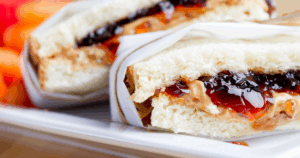

1: PB & J Sandwich
Peanut butter and jelly is going to top my list for a variety of reasons. It is one of the quickest assemblies, and a well-stocked athlete’s pantry will have bread, nut butter, and jelly or jam on hand most of the time. It is highly portable and does not require refrigeration.
It is also quite scrumptious and easy to consume, even if you have pre-game jitters and a nervous tummy.
It’s going to come in at my most cost-effective recommendation, at just a dollar or two per serving.
Zero time for prep? Keep Smucker’s Uncrustables in your freezer for easy grab-and-go.
Allergic to peanut butter? Of course, choose an appropriate substitution like sunflower seed butter, soy nut butter, or almond or cashew butter, if tolerated.
Nutrition facts: A PB&J made with 2 slices of whole grain bread, 2 tablespoons of natural peanut butter, and 2 tablespoons of jelly or jam comes in at about 510 calories, 76 grams of carbohydrates, 19 grams of protein, and 19 grams of fat; perfect for fueling up for whatever training or competition is on your schedule.

2: Tuna Salad Sandwich
Another athlete’s favorite is a tuna salad sandwich, made with the high-protein, cost-effective pantry staple: canned tuna.
Canned tuna provides omega-3 fats, which can help reduce inflammation and promote faster recovery for athletes. White albacore tuna has the highest amount of omega-3 at 600-900 mg/serving, but also has the highest mercury content. I recommend white albacore only once per week to avoid the risk of mercury toxicity.
My favorite tuna is a brand I’ve been buying from Costco for over a decade: Genova Yellowfin Tuna in Olive Oil. It is light tuna, which is lower in mercury than white albacore, so it’s safe to consume 2-3 times per week. While it is lower in omega-3 than white albacore, the packing in olive oil preserves some of the omega-3 content, providing about 200-300 mg/serving.
Tuna salad sandwiches are also portable, but will require a good lunch box and an ice pack to keep them cool and minimize the risk of foodborne illness (no thanks!).
Pro tip: Make your tuna salad with equal parts mayonnaise and plain Greek yogurt. This provides all the creaminess, with less added fat, a little protein boost, and a tangy, delicious flavor.
Nutrition Facts: Homemade tuna salad made with Greek yogurt and mayonnaise on whole-grain bread will provide about 420 calories, 44 grams of carbohydrates, 38 grams of protein, and 12 grams of fat, perfect to kickstart recovery after any training session.

3: Chicken and Spinach Wrap
Easy, peasy, more delicious, and less expensive than any kind of sandwich you can pick up on the go: a homemade chicken and spinach wrap. I like to encourage my athletes to make extra grilled chicken or even use rotisserie chicken for this easy wrap.
Adding ½ cup of pre-washed baby spinach is a great way to add color and boost the nutritional content of the wrap. This adds 80-90% of your daily vitamin K requirement, as well as vitamins A & C, folate, iron, magnesium, and potassium.
Wraps are nice and portable, easy to eat on the go; just make sure to remember your ice pack to keep the chicken cold.
Pro tip: add healthy fat and a big burst of flavor with homemade pesto mayo, which is a great compliment to the chicken and spinach. Other good add-ins are feta, hummus, tzatziki, roasted peppers, or microgreens.
Nutrition Facts: A whole grain wrap with 4 oz of grilled or rotisserie chicken, ½ cup of baby spinach, 1 tablespoon mayonnaise, and 1 tablespoon of pesto will provide about 440 calories, 34 grams of carbohydrates, 37 grams of protein, and 17 grams of fat for a delicious recovery snack.

4: Mediterranean Pita
No meat, no problem! This is a favorite way to enjoy a big burst of veggies and delicious flavor in a convenient portable pouch.
Use a medium-sized whole wheat pita, cut in half, and stuff each side with ¼ cup chickpeas, 2 tablespoons hummus, 1 tablespoon tzatziki, a sprinkle of feta cheese, sliced cucumbers, sliced bell peppers, and microgreens (or your favorite green).
Pitas make for great portability, and this sandwich is also one of the most cost-effective of the bunch.
All of the veggies can help keep cramps at bay with 600 mg of potassium in this powerful pita.
Pro tip: wait to add the tzatziki until you are ready to eat, so your pita doesn’t get soggy. Convenient condiment containers like these from OXO are super helpful.
Nutrition Facts: One medium whole wheat pita with chickpeas, hummus, tzatziki, feta, and veggies will provide approximately 450 calories, 50 grams of carbohydrates, 18 grams of protein, and 19 grams of fat; ideal for preworkout fuel as long as you have enough time to digest the veggies, and can be also be part of a recovery meal with an added glass of milk or a yogurt.

5: Egg Sandwich
Not just for breakfast, egg sandwiches are one of the most versatile options on the list. They can be made with bagels for higher pre-workout fuel, or made on an English muffin, whole grain toast, or a convenient wrap when carbohydrate needs are lower.
Each egg provides 7 grams of easily digestible protein, making eggs a great part of a recovery meal. Paired with a higher protein bread, turkey bacon, and your favorite cheese, these can easily provide over 30 grams of protein. Don’t forget to add some greens if you can.
Pro tip: egg sandwiches can be made ahead and easily reheated or even enjoyed cold!
Nutrition Facts: A two-egg sandwich on whole grain bread with 2 slices of turkey bacon, one slice of cheese, and ¼ cup of spinach provides about 410 calories, 38 grams of carbohydrates, 34 grams of protein, and 16 grams of fat, ideal for recovery or an anytime delicious athlete meal.
Ready for more breakfast-fueling ideas? Check out this post: 30-Gram Protein Breakfasts to Power Your Day, with 12 Examples.
Key takeaways
You don’t have to be a gourmet chef or spend hundreds of dollars per week on your training food. Simple meals like sandwiches are quick, easy, cost-effective, easily digestible, and quite tasty.
If you’re feeling stuck with “what to make” to fuel your athletic performance, I am here to support you.
I am accepting new sports nutrition clients in both Pennsylvania and Maryland. Contact me to set up an appointment so we can work together toward your strongest, most nourished self this year.
P.S. Your insurance may fully cover the cost of your visit – ask me for more details.
0 Comments